Industrial Mixers UK
Hammer Mills
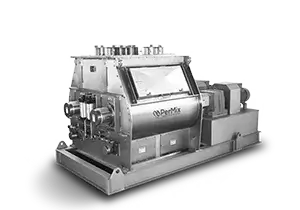
 Hammer Mills
Best in Innovation • Best In Performance • Best In Quality • Best In Price • Best In Warranty
Unleashing the Power of Hammer Mills: A Comprehensive Guide
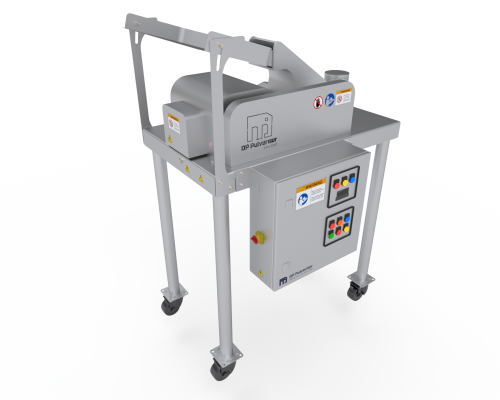
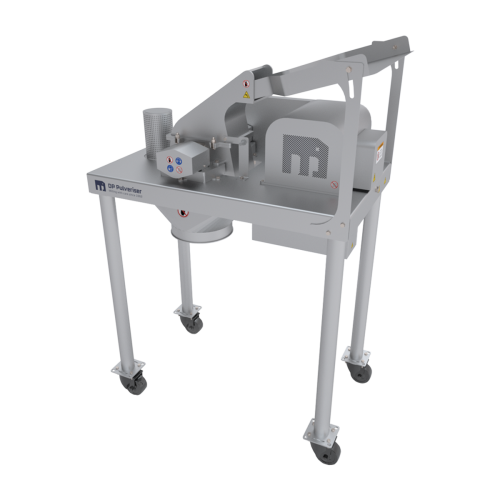
Hammer mills are robust, mechanical grinding systems designed for coarse to medium size reduction of dry materials. They are widely used across the UK and Europe as the first stage in milling processes where throughput, durability, and versatility matter more than ultra-fine precision.
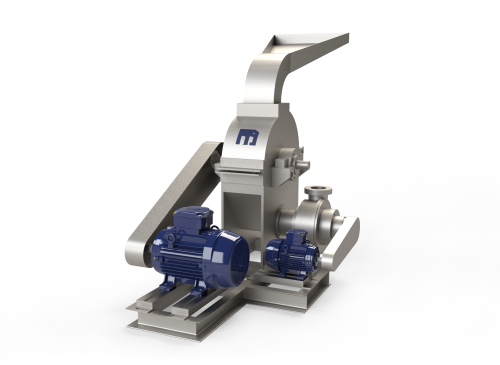
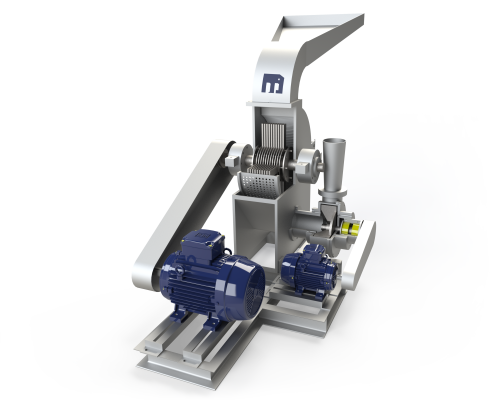
PerMix UK supplies hammer mills manufactured by DP Pulverizers, engineered for continuous industrial duty and seamless integration into modern milling, mixing, and material handling systems.
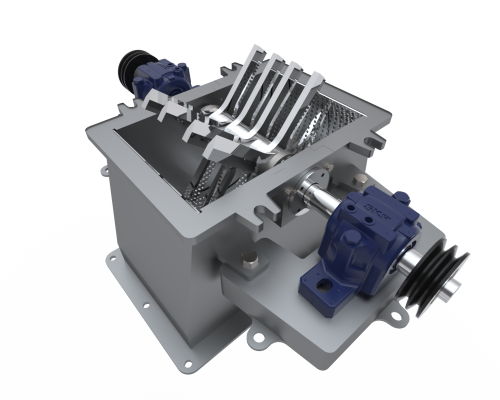
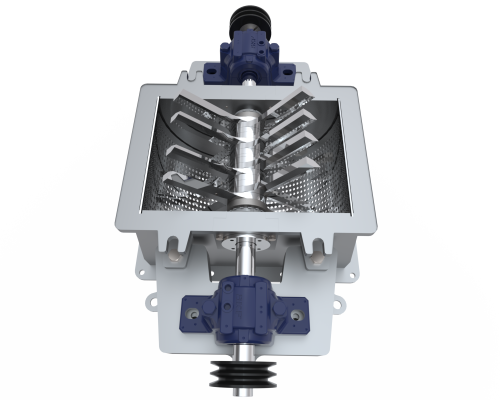
A hammer mill reduces material size using high-speed rotating hammers that impact and fracture material against breaker plates and sizing screens.
The grinding mechanism is simple, proven, and extremely effective:
Material enters the grinding chamber
Rotating hammers apply repeated impact
Fractured material passes through a screen
Oversized particles remain until reduced
This makes hammer mills ideal for primary grinding where feed sizes are large and material variability is high.
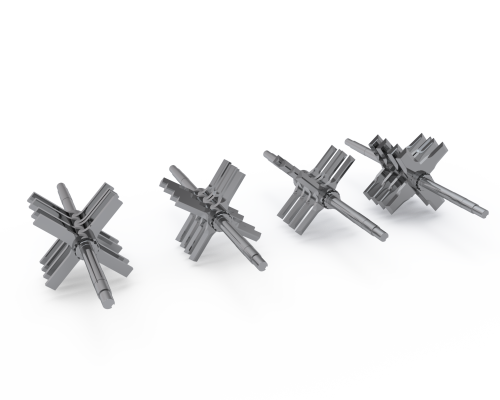
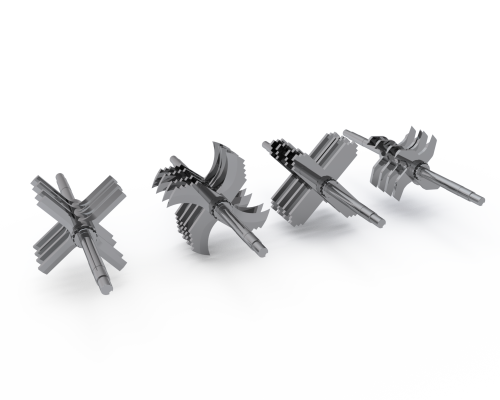
Material is fed into the mill and struck by swinging or fixed hammers mounted on a rotor. The combination of impact, shear, and collision against internal surfaces reduces the material until it is small enough to pass through the selected screen.
Key operating variables include:
Rotor speed
Hammer design and configuration
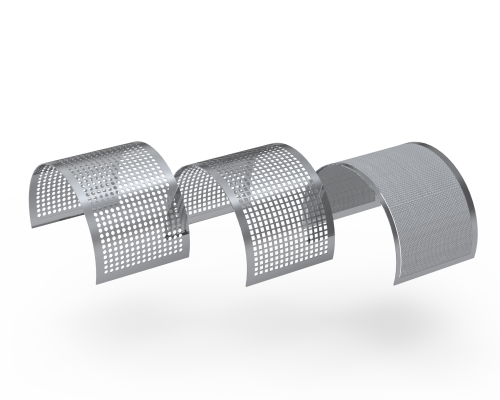
Screen size
Feed rate
Adjusting these parameters allows operators to balance throughput, particle size, and energy consumption.
Hammer mills from DP Pulverizers are designed for industrial reliability, not short-term duty.
They offer:
High throughput for coarse and medium grinding
Ability to process a wide range of materials
Simple, rugged construction
Easy screen changes for size control
Lower capital cost compared to fine grinding technologies
Available options include:
Reversible or replaceable hammers
Wear-resistant liners for abrasive materials
Dust-controlled enclosures
Integration with feeding and discharge systems
For many UK & EU operations, hammer mills are the most economical way to begin size reduction.
Hammer mills are used wherever bulk material must be reduced efficiently and reliably.
Grains and cereals
Animal feed ingredients
Dried vegetables and fibres
Sugar conditioning
Salts and crystalline chemicals
Fertilisers
Resins and intermediates
Limestone and gypsum
Clay and mineral blends
Construction additives
Biomass and organic waste
Reprocessed powders
Secondary raw materials
Hammer mills tolerate variability better than most fine grinding technologies, making them ideal for real-world materials—not just lab samples.
Hammer mills serve a different role than pin mills, jet mills, or ACMs.
Compared to pin mills: hammer mills produce coarser PSD with higher throughput
Compared to jet mills: hammer mills are simpler and far more economical
Compared to ACMs: hammer mills focus on size reduction, not precision control
They are often used upstream of more precise technologies to reduce load and improve overall system efficiency.
Hammer mills are frequently the first stage in multi-step milling lines.
Common integrations include:
Hammer mill → pin mill
Hammer mill → ACM
Hammer mill → jet mill
Hammer mill → air classifier
This staged approach reduces energy consumption, improves yield, and extends equipment life.
PerMix UK regularly engineers hammer mills as part of turn-key milling, mixing, and bulk material handling systems.
Hammer mills are ideal when:
Feed size is large or inconsistent
Coarse to medium grinding is acceptable
Throughput is a priority
Capital and operating cost must be controlled
Material variability is high
They are not precision instruments—but they are exceptionally dependable.
PerMix UK supports customers with:
Application-driven mill selection
Integration with downstream milling and classification
CE, UKCA, and ATEX-aligned designs
Long-term service and technical support
Backed by the engineering of DP Pulverizers, hammer mills supplied through PerMix UK are designed to work hard, tolerate abuse, and keep production moving.
Hammer mills and pin mills are often compared because they sit next to each other in many processing lines—but they are designed to solve very different problems.
Understanding where each excels (and where each struggles) is the fastest way to avoid over-engineering—or under-performing—your milling process.
PerMix UK supplies both technologies through DP Pulverizers, allowing systems to be designed around process reality, not catalogue bias.
Hammer mills break material down fast and hard
Pin mills refine material with control and consistency
Think of hammer mills as primary size reduction tools and pin mills as precision fine grinders.
Best for: Coarse to medium grinding with high throughput
Hammer mills use rotating hammers to repeatedly impact material against breaker plates and screens.
They are ideal when:
Feed size is large or inconsistent
Material variability is high
Throughput matters more than precision
Coarse or medium PSD is acceptable
Cost and simplicity are priorities
Strengths:
Extremely robust
High capacity
Simple mechanics
Tolerant of real-world materials
Limitations:
Broad particle size distribution
Limited fine control
Higher fines generation
Less suitable for heat-sensitive products
Typical role:
Primary milling / first reduction stage
Best for: Fine grinding and de-agglomeration with consistency
Pin mills use high-speed rotating pins to apply controlled impact and shear.
They are ideal when:
Finer, more uniform PSD is required
Throughput and control must coexist
De-agglomeration is critical
Energy efficiency matters
Product consistency affects quality
Strengths:
Tighter PSD than hammer mills
Better control at fine sizes
Shorter residence time
Cleaner operation
Limitations:
Smaller acceptable feed size
Less tolerant of extreme variability
Not suitable for true sub-micron work
Typical role:
Secondary milling / controlled fine grinding
Choose a Hammer Mill when:
Material enters the process large, fibrous, or irregular
Coarse reduction is needed before refinement
Downstream equipment will handle precision
The process must tolerate variability
Choose a Pin Mill when:
Feed material is already pre-reduced
PSD consistency affects performance
De-agglomeration is required
You need more control without jet milling complexity
In many UK & EU plants, the correct answer isn’t either/or—it’s both.
Common configurations:
Hammer mill → pin mill
Hammer mill → ACM
Hammer mill → pin mill → air classifier
This staged approach:
Reduces energy consumption
Improves yield
Extends equipment life
Delivers better PSD control
Hammer mills do the heavy lifting.
Pin mills do the fine work.
Hammer mills generate more heat due to longer residence time and friction
Pin mills apply energy more efficiently and briefly
For heat-sensitive products, pin mills—or cryogenic pin mills—are often the safer choice.
Use a hammer mill to make material manageable.
Use a pin mill to make material consistent.
Trying to force one to do the job of the other usually leads to:
Higher energy use
Lower yield
Poor PSD control
Unnecessary maintenance
Because PerMix UK supplies multiple milling technologies, system design starts with the material and the goal, not a single machine.
Backed by DP Pulverizers engineering, PerMix UK helps manufacturers:
Choose the correct milling stage
Combine technologies intelligently
Design scalable, compliant milling lines
Avoid over- or under-specifying equipment
Efficient milling is rarely about a single machine. In modern UK & EU processing plants, the best results come from layered size reduction—using primary and secondary milling stages to control energy, particle size, and yield.
Understanding the difference between primary and secondary milling is the key to designing systems that are stable, scalable, and economical.
PerMix UK supports these systems using milling technologies manufactured by DP Pulverizers, engineered to work together as complete process lines rather than isolated machines.
Primary milling is the first size reduction step. Its job is simple but critical:
turn large, inconsistent feed material into something manageable.
Primary milling focuses on:
Reducing large particle size
Handling variability in feed material
Preparing material for downstream refinement
Protecting precision equipment later in the process
Precision is not the goal here—stability is.
Primary milling typically uses:
Hammer mills for impact-based reduction
Pre-breakers or coarse mills for size conditioning
These machines are chosen because they:
Tolerate inconsistent feed sizes
Handle fibrous or mixed materials
Deliver high throughput
Are mechanically robust and forgiving
Primary milling sets the foundation. If this step is wrong, everything downstream suffers.
Secondary milling refines what primary milling started.
Its role is to:
Tighten particle size distribution (PSD)
Improve consistency
Control fines generation
Meet final product specifications
Secondary milling is where process control begins to matter more than brute force.
Secondary milling often uses:
Pin mills for controlled fine grinding
Air classifying mills (ACMs) for grinding + classification
Jet mills for ultra-fine or heat-sensitive applications
Standalone air classifiers for PSD correction
These technologies trade tolerance for precision—and that’s exactly what they’re designed to do.
Trying to force one machine to do everything usually leads to:
Excessive energy use
Broad PSD
Over-grinding
Reduced yield
Increased maintenance
A staged approach:
Reduces overall energy consumption
Improves final PSD consistency
Protects fine grinding equipment
Increases system uptime
Scales more easily as demand grows
Primary milling handles chaos.
Secondary milling delivers control.
Across UK & EU industries, common system designs include:
Hammer mill → Pin mill
For coarse reduction followed by controlled fine grinding
Hammer mill → ACM
For compact systems with built-in PSD control
Hammer mill → Jet mill → Air classifier
For ultra-fine, high-value products
Primary mill → Air classifier (yield optimisation)
When grinding is complete but PSD needs correction
Each configuration exists for a reason—usually learned the hard way.
One of the biggest benefits of staged milling is energy efficiency.
Breaking large particles in a jet mill or ACM is expensive and unnecessary. Letting a hammer mill do that work first:
Reduces load on fine mills
Lowers gas or electrical demand
Improves yield
Extends equipment life
This is process economics, not just engineering.
Primary milling typically generates more heat—but that heat is less damaging at larger particle sizes.
Secondary milling:
Uses shorter residence times
Applies energy more precisely
Allows temperature control or cryogenic operation if needed
Separating the stages lets you control where heat is introduced—and where it is not.
The correct primary/secondary setup depends on:
Feed size and variability
Target particle size and PSD
Heat sensitivity
Throughput requirements
Regulatory and safety constraints
Future scalability
This is why experienced system design matters more than machine selection alone.
Primary milling makes material workable.
Secondary milling makes material specification.
Plants that separate these roles:
Spend less energy
Waste less product
Scale faster
Sleep better during audits
High-performing milling systems are not built around a single machine. They are designed as process flows, where each stage prepares the material for the next—efficiently, predictably, and safely.
Across the UK and EU, PerMix UK engineers complete milling systems using technologies manufactured by DP Pulverizers, focusing on material behaviour, energy efficiency, and final particle size distribution (PSD) rather than isolated equipment selection.
This is how robust milling systems are designed—from first contact to finished powder.
Everything starts here—and most problems start here too.
Feed intake defines:
Maximum particle size
Variability in feed material
Moisture content
Bulk density and flow behaviour
A well-designed intake stage:
Prevents surges and starvation
Protects downstream equipment
Improves consistency across batches
Poor intake design quietly sabotages even the best mills.
Primary milling exists to remove chaos, not deliver precision.
Typical objectives:
Reduce large or irregular particles
Handle variability without choking
Create a consistent feed for secondary milling
Technologies commonly used:
Hammer mills
Pre-breakers or coarse grinders
At this stage:
Throughput matters
Robustness matters
Precision does not (yet)
Trying to achieve final PSD in primary milling wastes energy and creates instability downstream.
Secondary milling is where specification begins.
This stage focuses on:
Tightening PSD
Improving uniformity
Reducing fines and tails
Achieving repeatable output
Common technologies:
Pin mills for controlled fine grinding
Air classifying mills (ACMs) for grind + classify
Jet mills for ultra-fine or heat-sensitive materials
Secondary milling is selected based on target PSD, heat sensitivity, and throughput, not feed size.
Classification is not optional when PSD matters.
Air classifiers:
Remove oversize particles
Sharpen cut points
Improve yield
Reduce over-grinding
They can be:
Integrated (ACM)
Standalone (downstream of mills)
Part of closed-loop systems
Classification answers the most important question in milling:
Which particles are allowed to leave the system?
In high-value or regulated processes, closed-loop systems are used.
Oversized particles are:
Automatically rejected
Returned to the mill
Reprocessed until they meet spec
This approach:
Tightens PSD
Improves consistency
Reduces waste
Stabilises production
Closed-loop milling is common in pharmaceuticals, chemicals, battery materials, and advanced R&D.
As particles get smaller, heat becomes more dangerous.
Design considerations include:
Short residence times
Efficient energy transfer
Cooling jackets or conditioned air
Cryogenic milling where required
Temperature is not a side effect—it is a design variable.
Once PSD is achieved, protecting it matters.
Final system considerations:
Gentle discharge to prevent re-agglomeration
Dust-controlled transfer
Integration with mixing, blending, or packaging
Cleaning and changeover efficiency
A perfectly milled powder can still fail if it’s mishandled after grinding.
Plants that design milling systems holistically:
Use less energy
Waste less product
Achieve tighter PSD
Scale more easily
Reduce downtime
Pass audits more smoothly
Plants that select machines in isolation often:
Over-grind
Fight variability
Add equipment reactively
Spend more correcting problems than preventing them
PerMix UK designs milling systems by:
Understanding material behaviour first
Selecting primary and secondary stages intentionally
Integrating classification where it adds value
Engineering for compliance, safety, and scalability
Backed by DP Pulverizers’ milling technologies, the result is process-driven systems, not catalog-driven compromises.
Milling is not about making particles smaller.
It’s about deciding how small is enough—and enforcing that decision consistently.
Design the system correctly, and the machines take care of themselves.
PerMix is here to listen to your needs and provide sustainable solutions. Contact us to discover more.