Industrial Mixers UK
PerMix Homogenizer
 PerMix Homogenizer UK | High-Shear Mixing Systems
Best in Innovation • Best In Performance • Best In Quality • Best In Price • Best In Warranty
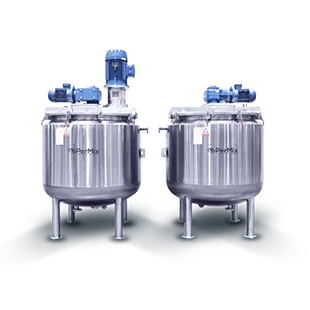
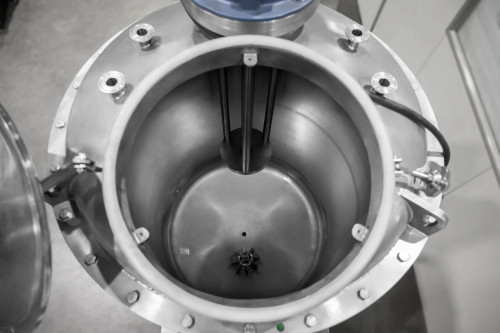
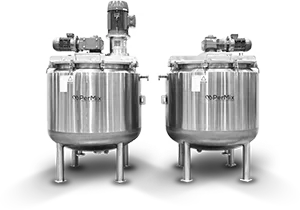
PerMix PS Series High Shear Homogenizers — available in top and bottom mount designs — are engineered for efficient batch-type mixing in diverse applications.
A homogenizer is selected when a process demands extreme uniformity, fine particle or droplet size, and long-term stability beyond the capability of standard mixers or even conventional emulsifiers. Across UK and EU manufacturing, homogenizers are critical wherever product performance, appearance, and shelf life depend on micron- or sub-micron-level dispersion.
Unlike general high-shear mixing, homogenization forces product through precisely engineered restriction zones at very high velocity and pressure. This creates intense shear, impact, and cavitation forces that permanently reduce particle or droplet size—producing a stable, repeatable structure that does not readily reform or separate.
In many applications, emulsifiers create a good dispersion—but homogenizers go further. They are chosen when:
Ultra-fine droplet or particle size is required
Long shelf life is non-negotiable
Texture, mouthfeel, or visual uniformity must be flawless
Downstream filling, spraying, or coating demands tight rheology control
This makes homogenizers essential in processes where even small inconsistencies lead to rejected batches or product recalls.
UK and EU manufacturers rely on homogenizers to:
Prevent creaming, sedimentation, and phase separation
Improve bioavailability of active ingredients
Enhance product smoothness and sensory performance
Achieve batch-to-batch repeatability at scale
Once a product is homogenized, it remains stable under storage, transport, and temperature variation—key for regulated and export-driven markets.
Homogenizers are inherently suited to continuous inline operation, making them ideal for:
High-throughput production
Hygienic, closed-loop processing
Easy integration into existing process lines
Process parameters established at pilot scale can be scaled reliably to full production, reducing commercialisation risk.
Homogenizers supplied for UK and EU use can be engineered with:
UKCA and CE marking
Hygienic designs for food, pharmaceutical, and cosmetic production
ATEX-rated configurations where solvent or hazardous environments require compliance under DSEAR regulations
Materials of construction, seals, and cleaning strategies are selected to support audits, validation, and long-term reliability.
Across the UK and EU, homogenizers are widely used in:
Dairy, beverages, sauces, and nutritional products
Pharmaceutical and nutraceutical formulations
Cosmetics and personal care products
Chemicals, coatings, and specialty dispersions
In short, a homogenizer is chosen when product structure must be controlled at the smallest scale. For manufacturers competing on quality, stability, and consistency, homogenization is not an upgrade—it is a requirement.
A homogenizer works by permanently reducing particle or droplet size and distributing it uniformly throughout a product. Unlike standard mixing or even high-shear emulsification, homogenization changes the internal structure of the product at a microscopic level—this is why its effects are stable, repeatable, and long-lasting.
In UK and EU manufacturing, two primary homogenization approaches are used: high-pressure homogenization and mechanical (rotor–stator) homogenization. Understanding the difference is critical when selecting the right technology.
High-pressure homogenizers force product through a precision-engineered valve or orifice at extremely high pressure. As the product passes through this restriction, it experiences a combination of:
Intense shear forces
Sudden pressure drop
Turbulence and cavitation
Particle-to-particle impact
These forces break droplets or particles down to micron or sub-micron size, creating a highly stable dispersion that resists separation, creaming, and sedimentation.
High-pressure homogenization is typically chosen when:
Ultra-fine droplet size is required
Long shelf life is critical
Bioavailability or functional performance matters
Absolute batch-to-batch repeatability is required
This method is common in dairy, beverages, pharmaceuticals, nutraceuticals, cosmetics, and specialty chemicals across the UK and EU.
Mechanical homogenizers use a rotor–stator system operating at very high speed. Product is drawn into the homogenizing head and repeatedly subjected to shear and turbulence as it passes through tight clearances.
This approach:
Reduces droplet and particle size significantly
Produces highly uniform emulsions and dispersions
Operates at lower pressure than high-pressure systems
Mechanical homogenization is often preferred when:
Inline integration is required
Energy efficiency is a priority
Viscous products must be processed
Continuous operation is needed without extreme pressures
While droplet size may not reach the sub-micron levels of high-pressure systems, mechanical homogenizers deliver excellent stability for a wide range of food, cosmetic, chemical, and industrial products.
The key outcome of homogenization is surface area control. By reducing particle or droplet size and narrowing the size distribution:
Gravity has less effect on separation
Brownian motion helps keep particles suspended
Emulsifiers work more effectively
Texture and rheology become predictable
This is why homogenized products remain stable during storage, transport, and temperature changes—a major advantage in UK and EU supply chains.
Homogenizers are typically installed inline, making them ideal for:
Closed, hygienic processing
Continuous production
Reduced manual handling
Consistent, scalable performance
Process conditions established at pilot scale can be carried directly into production—minimising risk during scale-up.
Homogenizers supplied by PerMix can be engineered with UKCA and CE marking, hygienic construction, and ATEX-rated configurations where required under DSEAR regulations. Designs support both food-grade and industrial processing environments with long-term reliability.
In practical terms, homogenization works by eliminating structural weak points in a formulation. Once those weak points are gone, separation stops being a risk—and quality becomes predictable.
This is the question UK and EU manufacturers quietly argue about in process reviews—and where a lot of projects go sideways. The confusion is understandable: both emulsifiers and homogenizers improve uniformity, but they do it in fundamentally different ways and deliver very different outcomes.
Choosing the right one is about how stable your product must be, how fine the structure needs to be, and how much risk you can tolerate.
An emulsifier applies controlled high shear—typically via a rotor–stator—to reduce droplet size and distribute phases evenly. It creates a stable emulsion, but stability depends on formulation, emulsifying agents, and operating conditions.
Use an emulsifier when:
You need oil and water combined reliably
Droplet size reduction is important, but not extreme
Shelf life requirements are moderate to long
Texture, appearance, and repeatability matter
Viscosity is medium to high
Emulsifiers are excellent for most food products, cosmetics, many chemicals, and general industrial emulsions. They offer flexibility, lower operating pressure, and easy inline or batch integration.
Think of emulsification as structured persuasion: you convince the phases to stay together.
A homogenizer goes further. It uses very high pressure or extreme mechanical energy to permanently break droplets or particles down to micron or sub-micron size. Once homogenized, the structure is fundamentally changed.
Use a homogenizer when:
Ultra-fine droplet or particle size is required
Long shelf life is non-negotiable
Separation, creaming, or sedimentation cannot occur
Bioavailability or functional performance matters
Downstream filling, spraying, or coating is sensitive
Homogenizers are essential in dairy, beverages, pharmaceuticals, nutraceuticals, high-end cosmetics, and specialty chemicals. They deliver the highest level of stability—but with higher energy input and tighter process control.
Homogenization isn’t persuasion—it’s structural enforcement.
Here’s the practical difference that matters:
Emulsified products are stable enough
Homogenized products are structurally stable
If a product must survive long storage times, temperature swings, transport vibration, or regulatory scrutiny without any visible change, homogenization is usually required.
If separation can be managed through formulation and normal storage conditions, emulsification is often sufficient—and more economical.
Both technologies can be deployed inline or in batch systems, but scale-up behaviour differs:
Emulsifiers scale easily and tolerate formulation changes
Homogenizers demand tighter control but scale very predictably
Many UK and EU manufacturers start with emulsification and later add homogenization when shelf-life targets tighten or markets expand.
Both systems can be engineered for:
UKCA and CE marking
Hygienic food and pharmaceutical design
ATEX-rated operation under DSEAR regulations where required
The difference isn’t compliance—it’s process necessity.
If you need good stability and flexibility → choose an emulsifier
If you need maximum stability and permanence → choose a homogenizer
Trying to make an emulsifier behave like a homogenizer usually results in:
More passes
More energy
More heat
More rework
And eventually, a second piece of equipment.
Systems supplied by PerMix are often configured so emulsification and homogenization work together, not against each other—allowing manufacturers to match energy input precisely to product requirements.
Homogenizers used in UK and EU manufacturing must do more than reduce particle size—they must integrate cleanly into regulated processes, operate reliably at scale, and adapt to changing formulations. PerMix homogenizers are engineered with a wide range of features and options so performance, compliance, and flexibility are built in from day one.
PerMix offers homogenizer configurations tailored to process requirements, including:
High-pressure homogenization for ultra-fine droplet or particle size
Mechanical (high-shear) homogenization for inline, continuous processing
Single-stage or multi-stage homogenization for enhanced stability and control
Technology selection is based on required droplet size, viscosity, throughput, and stability targets.
Homogenizers are designed for inline installation, supporting:
Closed, hygienic processing
Continuous production at high throughput
Consistent, repeatable results batch after batch
This reduces manual handling, improves hygiene, and simplifies scale-up from pilot to production.
Precise control over operating conditions allows manufacturers to fine-tune product structure. Options include:
Adjustable pressure settings
Variable speed drives
Multi-pass or recirculation capability
This ensures optimal results without over-processing or excessive heat generation.
Materials and finishes are selected based on application and regulatory needs:
304 or 316L stainless steel construction
Polished internal surfaces for hygienic applications
Robust industrial designs for chemicals and specialty materials
Seal and gasket materials are chosen to match product chemistry and cleaning regimes.
Homogenization can generate heat, particularly at high pressures. PerMix systems can be integrated with:
Jacketed tanks for heating or cooling
External heat exchangers
Temperature monitoring and interlocks
This protects heat-sensitive ingredients and maintains product integrity.
Homogenizers can be supplied with:
CIP-ready designs for food and pharmaceutical production
Minimal hold-up volume to reduce product loss
Easy-access wear components for simplified maintenance
These features reduce downtime and support validation and audit requirements.
PerMix homogenizers can be supplied with:
PLC and HMI controls
Recipe management and batch tracking
Integration with upstream and downstream equipment
Automation improves repeatability, reduces operator dependency, and supports consistent quality at scale.
All systems can be engineered to meet:
UKCA and CE marking requirements
Hygienic standards for regulated industries
ATEX-rated configurations for hazardous or solvent-based environments under DSEAR regulations
Grounding, guarding, pressure relief, and safety interlocks are designed to meet both regulatory and real-world plant expectations.
In practice, these features allow manufacturers to apply exactly the right amount of energy—no more, no less—to achieve stable, repeatable products without waste or rework.
Homogenizers supplied by PerMix are configured around the process, not the catalogue—because in homogenization, precision is everything.
Homogenizers are used across the UK and European manufacturing landscape wherever products demand ultra-fine dispersion, long-term stability, and repeatable performance at scale. In many cases, homogenization is the step that determines whether a formulation is commercially viable—or perpetually problematic.
Homogenizers supplied by PerMix are applied across a wide range of regulated and industrial sectors, each with distinct technical and compliance pressures.
In food and drink processing, homogenization is essential for creating stable, shelf-ready products with consistent texture and appearance. Common applications include:
Dairy products such as milk, cream, and yoghurt
Plant-based and alternative beverages
Sauces, dressings, marinades, and condiments
Nutritional drinks and functional beverages
Homogenization prevents creaming and separation, improves mouthfeel, and ensures products remain stable throughout distribution and storage—critical for UK and EU retail supply chains.
In pharmaceutical and nutraceutical manufacturing, homogenizers are used where uniformity and bioavailability are tightly controlled. Applications include:
Liquid and semi-solid dosage forms
Emulsified drug delivery systems
Vitamin, mineral, and botanical formulations
Suspensions requiring long-term stability
Fine particle or droplet size improves consistency, dosing accuracy, and validation outcomes in highly regulated environments.
Cosmetic and personal care products rely on homogenization to deliver sensory performance and visual consistency. Typical applications include:
Creams, lotions, and serums
Ointments, balms, and gels
Hair care and skin care emulsions
Homogenization produces smooth textures, prevents phase separation, and ensures products look and feel identical from the first use to the last.
In chemical processing, homogenizers are used where formulation consistency directly affects performance. Applications include:
Paints, coatings, and dispersions
Adhesives and sealants
Specialty emulsions and suspensions
Here, homogenization improves stability, reduces settling, and enhances functional properties—often under ATEX-rated and DSEAR-compliant operating conditions.
Homogenizers are increasingly applied in advanced and industrial sectors such as:
Lubricants and industrial fluids
Process additives and specialty chemicals
Energy, battery, and material science applications
In these environments, homogenization supports tight process control, repeatability, and downstream performance where small structural variations can have large effects.
Across all UK and EU applications, the reason for choosing a homogenizer is the same: control at the smallest scale. By permanently reducing particle or droplet size and narrowing the size distribution, homogenizers deliver products that are predictable, stable, and scalable.
When separation, inconsistency, or shelf-life failures are not acceptable, homogenization becomes a core process step, not an optional enhancement.
When selecting a homogenizer, consider:
Our UK engineers will match your requirements to the right rotor-stator geometry, drive power, and system configuration.
If your products need fine, stable emulsions or uniform dispersions, the PerMix UK Homogenizer is the answer.
Contact PerMix UK with your product specs and process goals. We’ll configure a homogenizer tailored to your UK/EU facility, ready for compliance and production success.
PerMix is here to listen to your needs and provide sustainable solutions. Contact us to discover more.
PerMix Homogenizer Videos